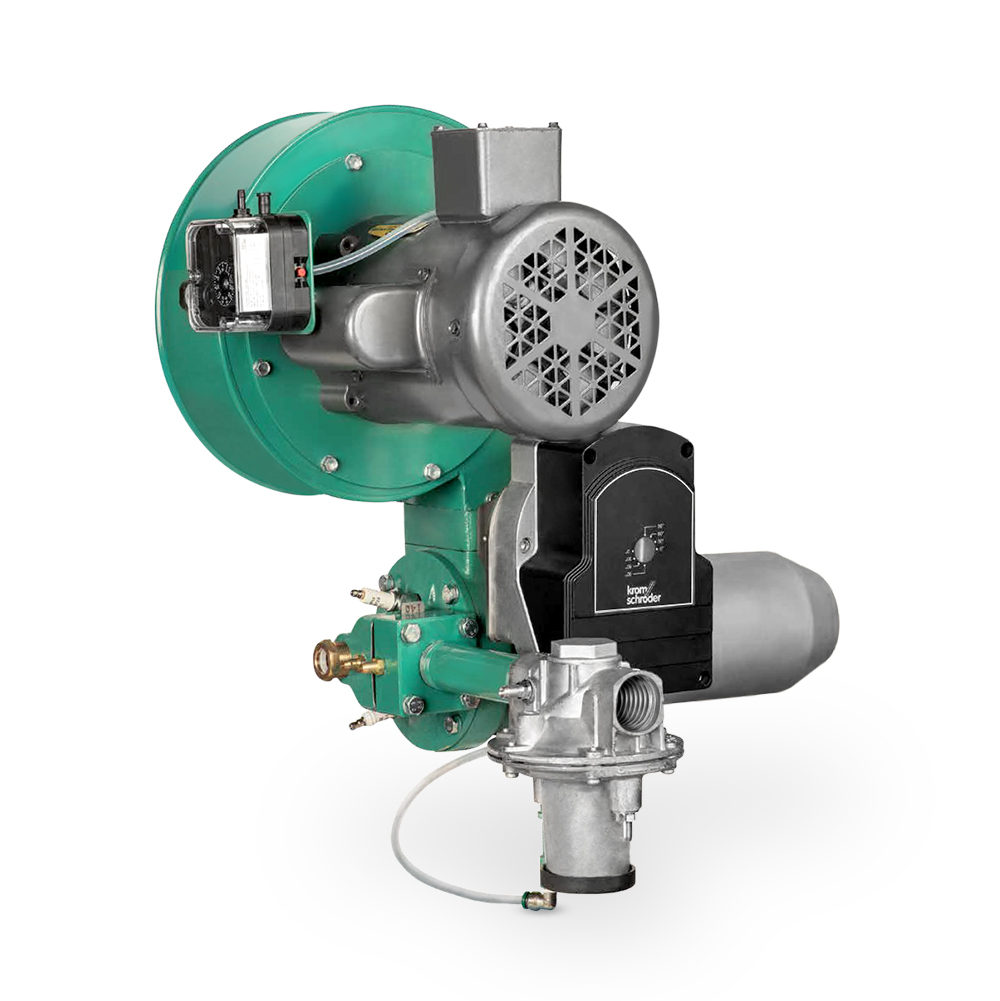
Honeywell Eclipse RatioAir Velocity Burners

Technical Specifications

Heat input 78–5,856 kW HHV maximum ratings, RA0025–RA2000
Burner type Packaged velocity burner
Fuel Natural gas; additional gases on specified models
Control Ratio or excess-air operation
Air supply Integral blower
Combustor options Straight, medium or high velocity, depending on size

Ratings vary by size and configuration. HHV/LHV values are fuel heat input, not useful process heat output.

Price on request

Product Overview

Eclipse RatioAir combines a velocity burner with an integral blower for industrial air-heating and furnace applications. It is intended for duties where the discharge of hot combustion gases matters as well as total heat input, including confined firing chambers and applications requiring ratio control or excess-air operation.

The range provides different combustor arrangements to match the required discharge characteristics. It also includes configurations for fuels outside the usual natural-gas specification. These options make RatioAir relevant to projects where chamber geometry, fuel composition and the air-control strategy need to be considered together.

Velocity Heating with Packaged Air Supply

The burner’s discharge helps circulate hot gases within the heating space. The useful result depends on the combustor and installation, so velocity is selected with the chamber layout rather than treated as an isolated performance figure. The assembly can be serviced from the rear, and the manufacturer provides piping-orientation choices to help integrate it into the equipment.

WHERE IT WORKS

Applications

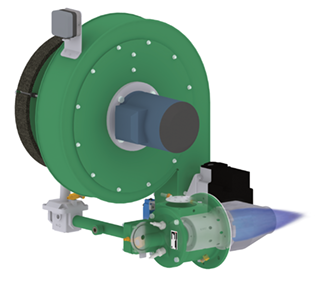
RatioAir manufacturer configuration drawing: piping and motor orientations. This is an installation reference for the selected assembly, not a complete furnace layout.
01

Ovens and confined firing chambers

RatioAir is designed for installations where a packaged blower and a velocity discharge are useful within a limited heating space. The assessment should include flame clearance and the path of returning furnace gases, alongside the heating duty and operating temperature.

02

Annealing and aluminium homogenizing

These applications appear in the official RatioAir product literature. Burner selection considers the temperature cycle and required heat distribution, with the appropriate combustor chosen for the chamber. The capacity of a particular straight, medium- or high-velocity assembly must be checked separately.

03

Unusual or low-heating-value fuel gases

Honeywell identifies unusual fuels as a RatioAir application. A fuel analysis is required to establish the suitable nozzle and operating arrangement. Heating value, composition and variation in supply should be reviewed together; a nominal gas description alone is insufficient.

Choosing the Configuration

Different combustors have different capacity and temperature limits. The model-specific technical sheet is the reference for selecting the material, velocity and fuel arrangement.

Product FAQs

Selection, supply and retrofit guidance for your RatioAir project.

RatioAir selection

How should RatioAir be matched to an oven or furnace?

Selection should consider heat input, chamber pressure, process temperature and the required combustion-gas flow pattern. Combustor choice and the space available in front of the burner affect the installation.

Share the furnace or oven geometry, burner positions, load location and operating range. This helps review whether the proposed burner arrangement suits the process rather than relying on nominal capacity alone.

Is RatioAir interchangeable with RatioMatic at the same capacity?

A similar heat-input rating does not establish interchangeability. The two families have different combustion and application characteristics, and their complete assemblies and interfaces need to be compared.

Provide the existing model, combustor, fuel specification, chamber conditions and control details. A replacement proposal should address flame and flow behaviour, mounting, air supply and control compatibility together.

Supply & retrofit

What should be included in the quotation?

The proposal should define the burner size, combustor, blower and ratio-control arrangement, plus the required piping and motor orientation. Fuel specification is particularly useful when the gas differs from the reference fuel in the documentation.

Ignition, flame supervision, the fuel train and system controls should be itemized. Do not infer a complete furnace combustion system from the burner family name or configuration drawing.

What information helps assess a retrofit?

Send the nameplate, installation photos, combustor details and a furnace sketch showing the burner and load positions. Include available air and gas data, chamber pressure and the actual operating range.

P&ID and electrical drawings help identify reusable controls and safety interfaces. Note any changes to production, exhaust or burner positioning, as these can affect a replacement even if the required heat input stays similar.

How are price and lead time confirmed?

Price and lead time depend on the selected configuration, supply scope, quantity and delivery country. Include any planned shutdown date so current availability and the required delivery date can be discussed before ordering.

What if we do not have all the technical information yet?

Start with the application, whether the installation is new or a retrofit, and any model details or photos you have. Mention available P&ID or electrical drawings in the enquiry and share them by email during follow-up.

Product enquiry

Honeywell Eclipse RatioAir industrial burner
HoneywellRatioAir
Part code

Send the chamber drawing, operating temperature, duty range and fuel analysis. Include the available gas pressure and electrical supply.

Planning a retrofit?

Along with the nameplate and installation photos, available P&ID (piping and instrumentation diagram) and electrical or control drawings help us understand the existing system.

Drawings are optional. Mention them below and share them by email during follow-up.

Have a P&ID or electrical drawings? Let us know here; files can be shared by email during follow-up.

Your information is used to respond to your inquiry. Privacy policy

Chat with us on WhatsApp