Honeywell Eclipse RatioMatic Gas Burners

Technical Specifications

Heat input 150–8,784 kW HHV maximum ratings at neutral chamber pressure
Fuel Natural gas; other specified fuel gases by model
Control Air/gas ratio control
Air supply Integral blower
Chamber temperature Up to 1,038°C with the appropriate combustor

Ratings vary by size and configuration. HHV/LHV values are fuel heat input, not useful process heat output.

Price on request

Product Overview

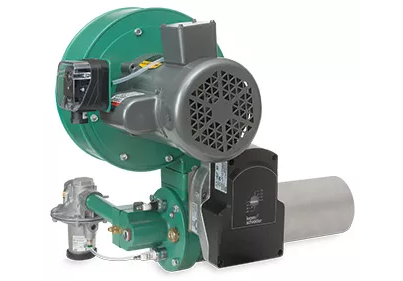
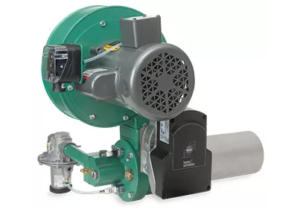
Eclipse RatioMatic is a packaged nozzle-mixing burner for direct and indirect air heating. Its combustion-air blower, ratio regulator and fast-mixing nozzle work together to maintain the relationship between gas and combustion air as firing demand changes. The range serves ovens, dryers and industrial heating processes with different capacity and installation requirements.

The ratio regulator responds to changes in combustion-air pressure, while a directly driven air butterfly valve avoids the external linkage used in some air-control arrangements. These features are central to the RatioMatic design: the burner is selected as a coordinated air-heating assembly, with its combustor, fuel arrangement and blower matched to the application.

Ratio Control and Combustor Selection

Ratio control reduces both gas and combustion air as the burner turns down. This distinguishes RatioMatic from a fixed-air design such as ThermAir. The preferred arrangement depends on the process: some ovens favour coordinated air/fuel modulation, while a drying duty may have a separate need for air to remove moisture. Alloy, silicon-carbide or refractory combustor arrangements are selected according to the burner size and chamber conditions.
WHERE IT WORKS

Applications

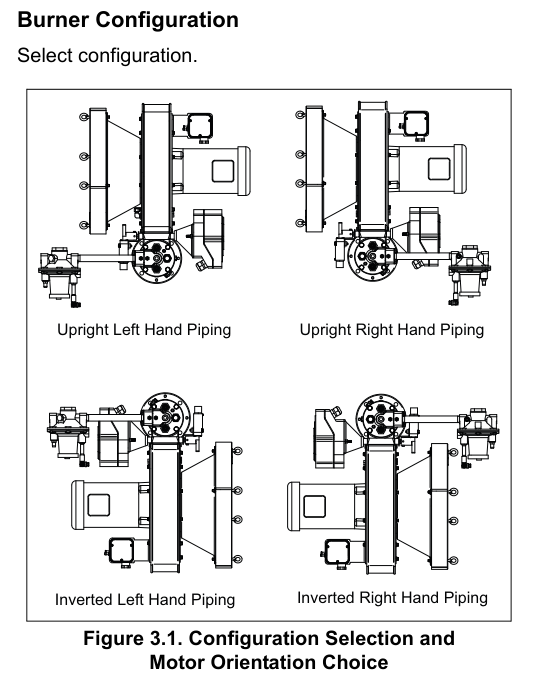
RatioMatic manufacturer configuration drawing: piping and motor orientations. The selected orientation must match the installation and access requirements.
01

Dry-off and curing ovens

RatioMatic is listed for drying and curing duties, including paint-finishing ovens. It provides a controllable heat source as the oven moves between warm-up and production. Selection should establish peak duty, the lowest holding load and the pressure in the heating chamber.

02

Textile drying and food processing

The manufacturer identifies textile drying, food processing and baking among its applications. In these systems the burner heats the process air directly or through an indirect arrangement. Airflow, temperature rise and the required separation of combustion products guide the configuration.

03

Annealing and aluminium homogenizing

RatioMatic application literature also includes these metal-heating processes. For such projects, the combustor and burner rating must suit the actual chamber temperature and heating cycle. Furnace circulation and the number of independently controlled zones remain part of the overall equipment design.

Choosing the Configuration

The published range covers multiple burner sizes. Blower frequency, chamber pressure and combustor material determine the applicable rating and temperature limit.

Product FAQs

Selection, supply and retrofit guidance for your RatioMatic project.

RatioMatic selection

What information is needed to select a RatioMatic burner?

Provide the required maximum and minimum heat input, fuel and supply pressure, chamber pressure, and process temperature. The burner size and combustor configuration should be considered together.

Describe whether the equipment heats the process directly or indirectly, and include the available mounting space. A capacity figure alone does not establish that the combustor and operating range suit the application.

Can RatioMatic reuse the existing air/gas control arrangement?

RatioMatic uses a coordinated combustion-air and fuel-ratio arrangement. Reusing existing components requires checking their function and suitability for the selected burner, rather than assuming that any existing regulator or actuator will match.

Send the current blower, regulator, actuator and flame-control details. We can then clarify which items belong in the proposed supply scope and which interfaces need review by the system designer.

Supply & retrofit

What should be included in the quotation?

Identify the required burner, blower and ratio-control configuration, along with ignition and flame-supervision requirements. Piping and motor orientation should be agreed for the actual installation.

The quotation should state which fuel-train and control components are included. Existing machine controls, wiring, installation and commissioning are separate items unless specifically agreed.

What information helps assess a retrofit?

Share the installed burner nameplate, combustor and mounting photos, fuel pressure, chamber pressure and operating duty range. Include the regulator, actuator and blower details if you intend to retain them.

A P&ID and electrical or control drawings help us understand how firing demand, air supply and flame supervision interact. Report the operating problem or production change that prompted the retrofit, not only the model being replaced.

How are price and lead time confirmed?

Price and lead time depend on the selected configuration, supply scope, quantity and delivery country. Include any planned shutdown date so current availability and the required delivery date can be discussed before ordering.

What if we do not have all the technical information yet?

Start with the application, whether the installation is new or a retrofit, and any model details or photos you have. Mention available P&ID or electrical drawings in the enquiry and share them by email during follow-up.

Product enquiry

Honeywell Eclipse RatioMatic industrial burner
HoneywellRatioMatic
Part code

Send maximum and minimum duty, fuel pressure, chamber pressure, temperature range and the existing control interface.

Planning a retrofit?

Along with the nameplate and installation photos, available P&ID (piping and instrumentation diagram) and electrical or control drawings help us understand the existing system.

Drawings are optional. Mention them below and share them by email during follow-up.

Have a P&ID or electrical drawings? Let us know here; files can be shared by email during follow-up.

Your information is used to respond to your inquiry. Privacy policy

Chat with us on WhatsApp