Honeywell Eclipse ThermAir Fixed-Air Burners

Technical Specifications

Heat input 44–1,486 kW HHV maximum ratings, by model and frequency
Fuel Natural gas, propane or butane
Control Fixed combustion air with gas modulation
Air supply Packaged blower
Chamber temperature Up to 1,040°C with the appropriate combustor
Ignition Direct spark

Ratings vary by size and configuration. HHV/LHV values are fuel heat input, not useful process heat output.

Price on request

Product Overview

Eclipse ThermAir is a nozzle-mixing air-heating burner with a packaged blower and fixed combustion-air operation. Heat input is varied through the fuel supply while the combustion-air arrangement remains fixed. This makes the series particularly relevant to heaters and ovens where the process benefits from additional air throughout the firing range.

Honeywell specifically identifies textile ovens and moisture-removal duties among its applications. ThermAir also supports natural gas, propane and butane with the appropriate fuel setup. The fixed-air design, integrated gas and air orifices, and direct-spark ignition form a relatively straightforward package for machine and heater integration.

Why Fixed Air Matters in a Dryer

Drying involves both supplying heat and carrying moisture away from the product. ThermAir continues to supply combustion air as the fuel rate is reduced, which can be useful when an oven needs that additional airflow at lower thermal demand. It still operates within the dryer’s complete circulation and exhaust system; combustion airflow is not a substitute for establishing the required process-air balance.
WHERE IT WORKS

Applications

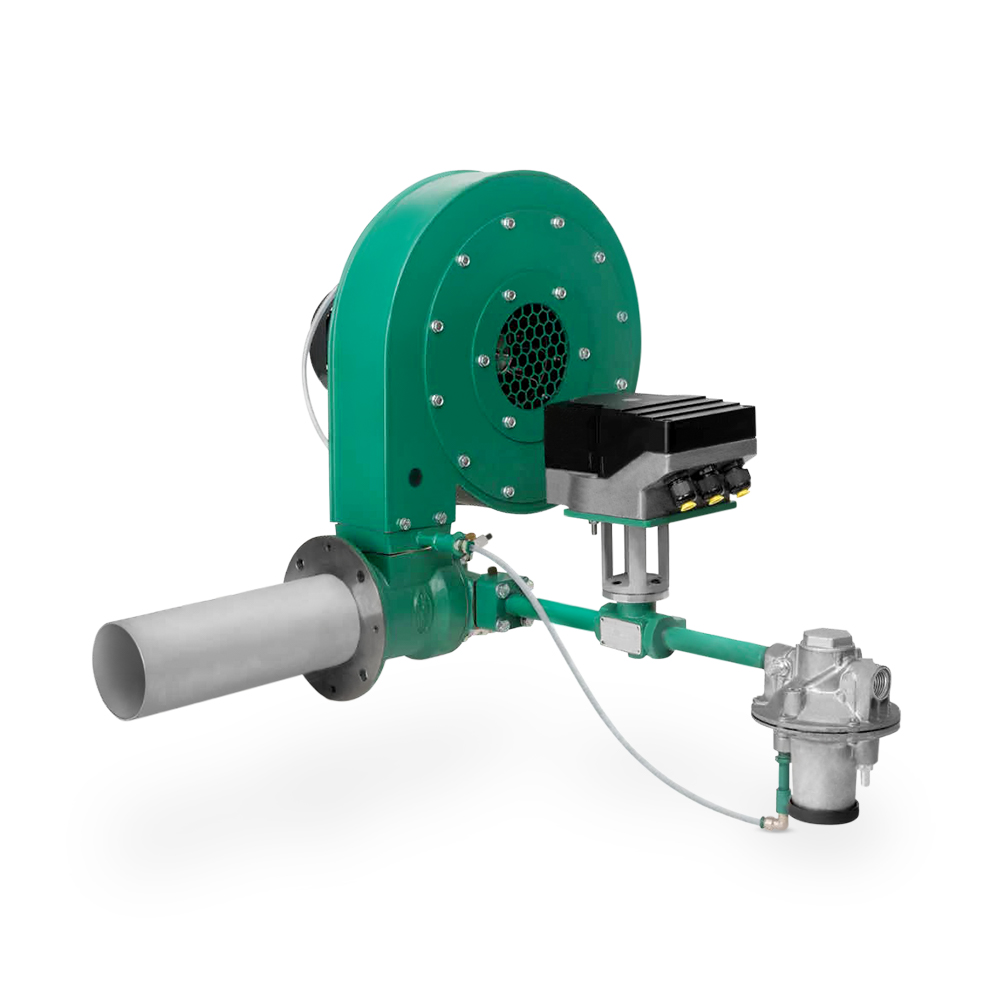
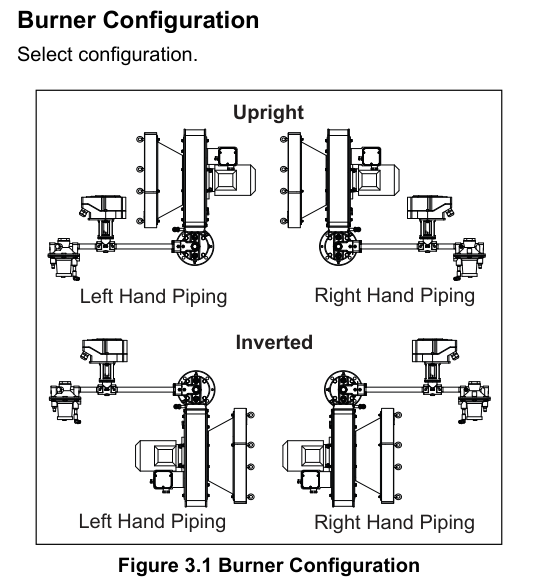
ThermAir manufacturer reference showing upright/inverted configurations and piping arrangements. The final mounting and piping layout is configuration dependent.
01

Textile ovens

ThermAir is specifically promoted for textile heating equipment. Its fixed-air operation is relevant when the process needs air movement as well as adjustable heat input. Selection should cover both the maximum drying duty and the operating condition at reduced line load.

02

Ovens that remove moisture from the product

Where evaporation is part of the process, the burner can provide heat while retaining its fixed combustion-air supply. The designer should establish how that air joins the oven circulation and how moisture leaves through the exhaust, including at low firing rates.

03

Industrial heaters with different fuel gases

The manufacturer identifies multi-fuel capability and applications with variable fuel characteristics. The available gas composition and pressure must be matched to the selected configuration. This is useful information to supply at enquiry stage, especially when replacing a burner on an existing heater.

Choosing the Configuration

Choose ThermAir when fixed-air operation fits the process. For a retrofit, check whether the existing circulation and exhaust system can accommodate that air-control strategy.

Product FAQs

Selection, supply and retrofit guidance for your ThermAir project.

ThermAir selection

What does fixed combustion air mean for a ThermAir application?

ThermAir uses a fixed combustion-air arrangement while fuel flow changes with firing demand. That characteristic should be considered when reviewing the process airflow and low-load operation.

For an oven or dryer, provide the duty range, ventilation and exhaust arrangement, and target temperatures. The process should be assessed at minimum as well as maximum load, rather than treating the burner as a modulating-air system.

Can ThermAir replace a burner with modulating combustion air?

The replacement needs a system review because the air-control principle may change. A match in maximum heat input does not show that the existing oven air balance, fuel controls or low-fire behaviour will remain suitable.

Send the current burner and control details, operating sequence and process conditions. This allows the proposed configuration and any required control changes to be defined before a supply recommendation is made.

Supply & retrofit

What should be included in the quotation?

Specify the burner size, blower and mounting orientation, fuel details and electrical supply. The quotation should identify the required ignition and flame-supervision equipment and any fuel-control components.

Existing ventilation controls, system interlocks and installation work should be clarified separately. The burner assembly does not by itself define the complete oven control scope.

What information helps assess a retrofit?

Provide burner and motor nameplates, mounting photos, fuel pressure, chamber conditions and the actual duty range. Describe whether combustion air currently stays fixed or changes with firing demand.

Available P&ID and electrical drawings help review the fuel-control sequence and interlocks. Include the oven circulation and exhaust arrangement so a proposed change can be assessed in the context of the process air balance.

How are price and lead time confirmed?

Price and lead time depend on the selected configuration, supply scope, quantity and delivery country. Include any planned shutdown date so current availability and the required delivery date can be discussed before ordering.

What if we do not have all the technical information yet?

Start with the application, whether the installation is new or a retrofit, and any model details or photos you have. Mention available P&ID or electrical drawings in the enquiry and share them by email during follow-up.

Product enquiry

Honeywell Eclipse ThermAir industrial burner
HoneywellThermAir
Part code

Send the required heat input, airflow, moisture-removal duty, temperature range, fuel and electrical frequency.

Planning a retrofit?

Along with the nameplate and installation photos, available P&ID (piping and instrumentation diagram) and electrical or control drawings help us understand the existing system.

Drawings are optional. Mention them below and share them by email during follow-up.

Have a P&ID or electrical drawings? Let us know here; files can be shared by email during follow-up.

Your information is used to respond to your inquiry. Privacy policy

Chat with us on WhatsApp