Honeywell Exothermics ER & RHT Indirect Air Heaters

Technical Specifications

ER capacity Published family range: 240–4,560 kW
RHT heat output 50–800 kW
Heating method Indirect; combustion gas separated from process air
ER standard temperature Outlet up to 400°C at 21°C inlet
RHT process temperature Up to 290°C
Fuel Gas-fired arrangements; RHT multi-fuel options by selection

ER family capacity and RHT useful heat output use different descriptions. Confirm the required process-air duty.

Price on request

Product Overview

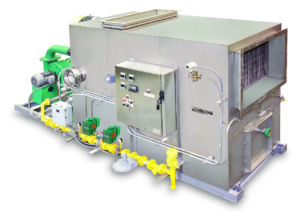
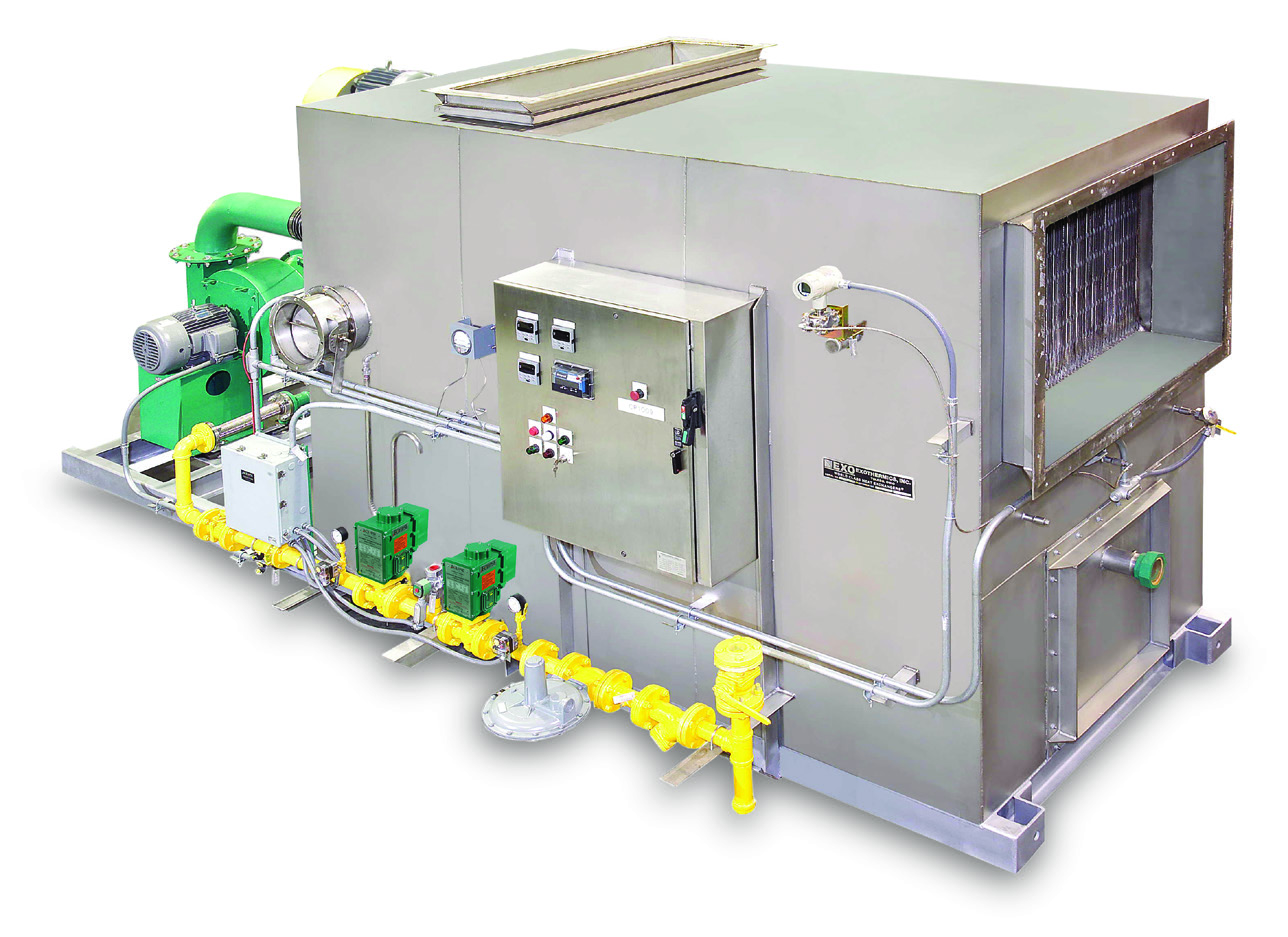
Exothermics ER and RHT heaters transfer heat to process air while keeping combustion products separate from that air stream. They address different duties: ER is used for clean-air heating and drying processes, while RHT is designed for recirculating ovens and dryers that require indirect heat.

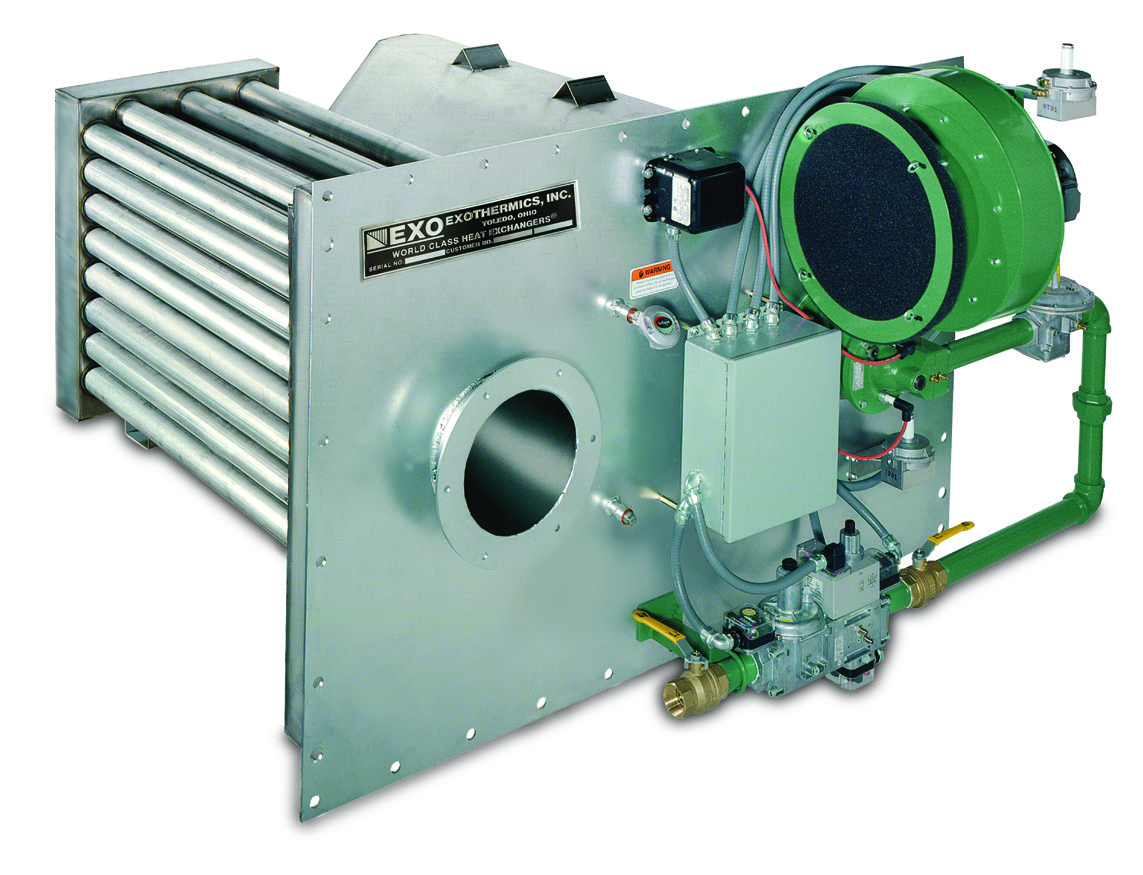
ER is supplied as an integrated heater arrangement with the combustion equipment mounted on a skid. RHT combines its burner, firing chamber and exhaust tubes into a unit intended for installation in the process-air circuit. The appropriate choice depends on the required air temperature, flow, recirculation and product-contact requirements.

Indirect Heating for Different Process-Air Duties

ER and RHT should be selected as separate heater designs. The ER package brings the heat-transfer and combustion equipment together for the specified air duty. RHT offers front maintenance access and a construction that accommodates thermal expansion in recirculating service. For either design, useful process-air heat duty and air-side pressure loss are more informative than burner input alone.
WHERE IT WORKS

Applications

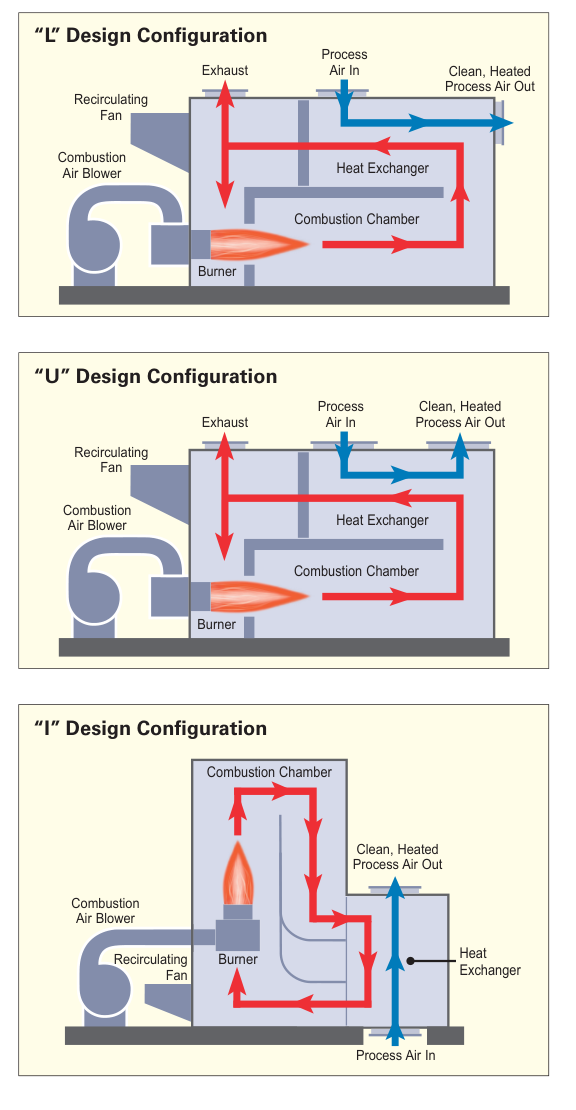
Exothermics ER manufacturer diagrams showing separated process-air and combustion-gas paths in several arrangements. The selected exchanger configuration must match the project.
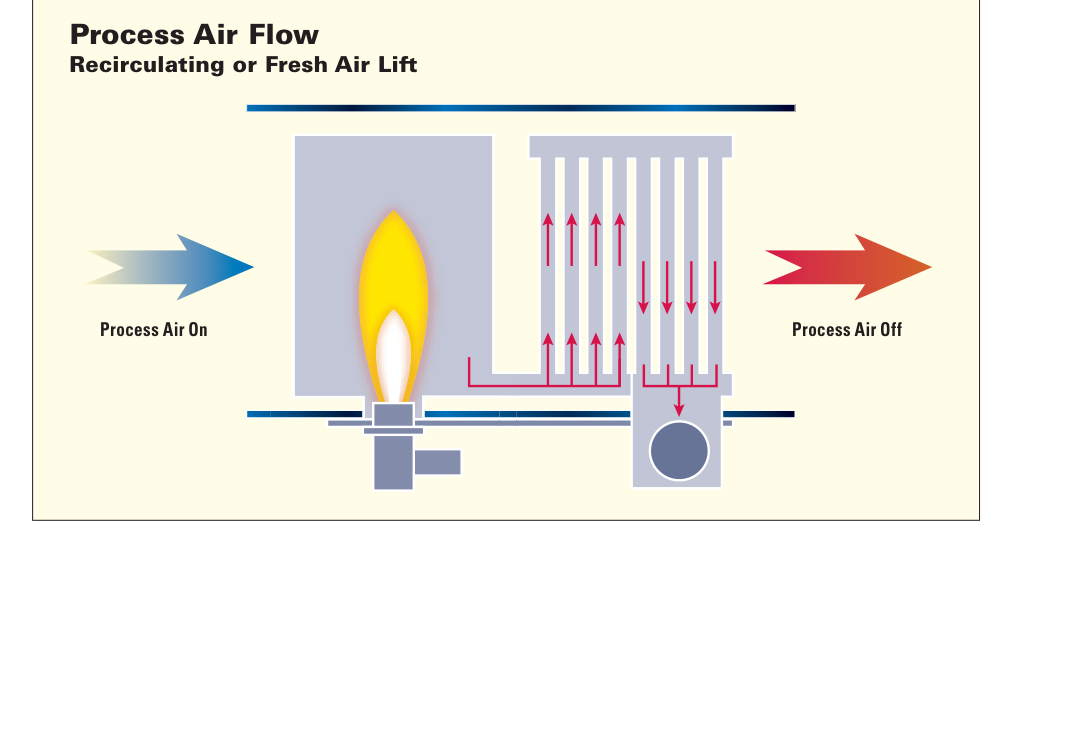
Exothermics RHT manufacturer recirculation-heating example. This is a separate system arrangement from the ER diagrams.
01

Dairy spray drying

ER has a documented manufacturer application in whey spray drying, where heated air must be kept separate from combustion products. This supports its use as a starting point for dairy drying enquiries. Materials, cleaning requirements and the exact air duty remain project-specific selections.

02

Pharmaceutical and chemical drying

These are manufacturer-listed ER applications. The heater supplies indirectly heated process air for spray dryers, chemical dryers and drying ovens. Product-contact requirements should be defined with airflow and temperature rise so that the selected construction suits the process.

03

Recirculating ovens and dryers

RHT is designed for this duty when combustion exhaust must remain separate from the process airstream. The heating unit is matched to the recirculation flow, temperature and available fan pressure. Maintenance access and the exhaust route also form part of the installation layout.

Choosing the Configuration

ER and RHT are separate heater designs. Their published capacity figures have different descriptions; select useful process-air heat duty from airflow and temperature rise rather than assuming all burner input reaches the process.

Product FAQs

Selection, supply and retrofit guidance for your Exothermics ER / RHT project.

Exothermics ER / RHT selection

How should I compare ER and RHT for indirect air heating?

Begin with the process-air duty and whether the installation uses a recirculation arrangement. ER and RHT should be assessed against their respective exchanger and system configurations, not selected solely from the burner input.

Provide airflow, inlet and required outlet temperatures, recirculation details and the available pressure drop. Include any cleanliness or material requirements so the air path and exchanger arrangement can be reviewed.

Is the burner heat-input rating the useful heat delivered to the air?

No. Fuel heat input and useful process-air heating duty are different quantities. The required exchanger duty depends on the process-air flow and temperature rise, while the complete system has its own operating characteristics.

State the required useful duty or provide the air data needed to establish it. Distinguish normal operation from warm-up and include pressure-drop constraints rather than matching a burner kW figure directly to the process load.

Supply & retrofit

What should be included in the quotation?

Clarify whether the enquiry covers an exchanger assembly, a burner-equipped heater or a wider air-heating package. Define materials, process-air connections and the required burner/control configuration.

Fans, ductwork, insulation, controls and installation should be listed as separate items where applicable. The application diagrams show flow arrangements and do not specify a universal bill of supply.

What information helps assess a retrofit?

Send the exchanger and burner identification, installation photos, connection dimensions and the process-air flow/temperature data. Include available pressure measurements, recirculation details and any contamination or corrosion concerns.

Available P&ID and electrical drawings help review the heating and air-handling interfaces. Describe whether the objective is replacement, increased duty or improved process-air separation so the proposal addresses the actual operating requirement.

How are price and lead time confirmed?

Price and lead time depend on the selected configuration, supply scope, quantity and delivery country. Include any planned shutdown date so current availability and the required delivery date can be discussed before ordering.

What if we do not have all the technical information yet?

Start with the application, whether the installation is new or a retrofit, and any model details or photos you have. Mention available P&ID or electrical drawings in the enquiry and share them by email during follow-up.

Product enquiry

Honeywell Exothermics ER indirect air heater
HoneywellExothermics ER / RHT
Part code

Send process airflow, inlet/outlet temperatures, recirculation rate, allowable pressure loss, cleanliness/material requirements and fuel.

Planning a retrofit?

Along with the nameplate and installation photos, available P&ID (piping and instrumentation diagram) and electrical or control drawings help us understand the existing system.

Drawings are optional. Mention them below and share them by email during follow-up.

Have a P&ID or electrical drawings? Let us know here; files can be shared by email during follow-up.

Your information is used to respond to your inquiry. Privacy policy

Chat with us on WhatsApp