MAXON CROSSFIRE Line Burners

Technical Specifications

Linear heat release 0.1–2.5 MMBtu/h/ft, approximately 96–2,404 kW/m
Fuel Natural gas reference data
Burner type Nozzle-mixing line burner
Combustion air External blower
Process-stream oxygen 4–21% in the manufacturer operating envelope
Maximum turndown Up to 25:1 at the specified rating

Ratings vary by size and configuration. HHV/LHV values are fuel heat input, not useful process heat output.

Price on request

Product Overview

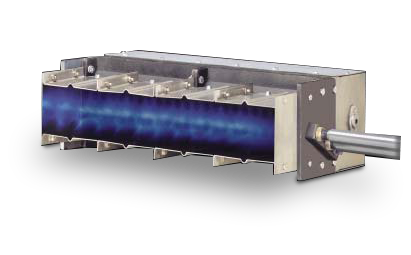
MAXON CROSSFIRE is a modular nozzle-mixing line burner for fresh and recirculating industrial process air. It supplies combustion air separately from the process stream and is designed to accommodate specified high-moisture, low-oxygen and inert-stream conditions. This distinguishes it from a raw-gas line burner that relies on fresh process air for combustion.

Straight sections, grid arrangements and insert cartridges allow the heat source to be distributed across a duct. The series is designed for low NOx and CO operation, with the final performance dependent on the burner layout, air/fuel control and process conditions. It is a candidate where both distributed heating and an emissions requirement influence the dryer design.

A Burner Layout for the Dryer Air Circuit

CROSSFIRE can be configured around the size and shape of the process-air passage. The design should account for the direction and speed of flow across the flame as well as moisture, oxygen and temperature. This is particularly relevant to recirculating dryers, where the air returning from the product can differ substantially from ambient fresh air.
WHERE IT WORKS

Applications

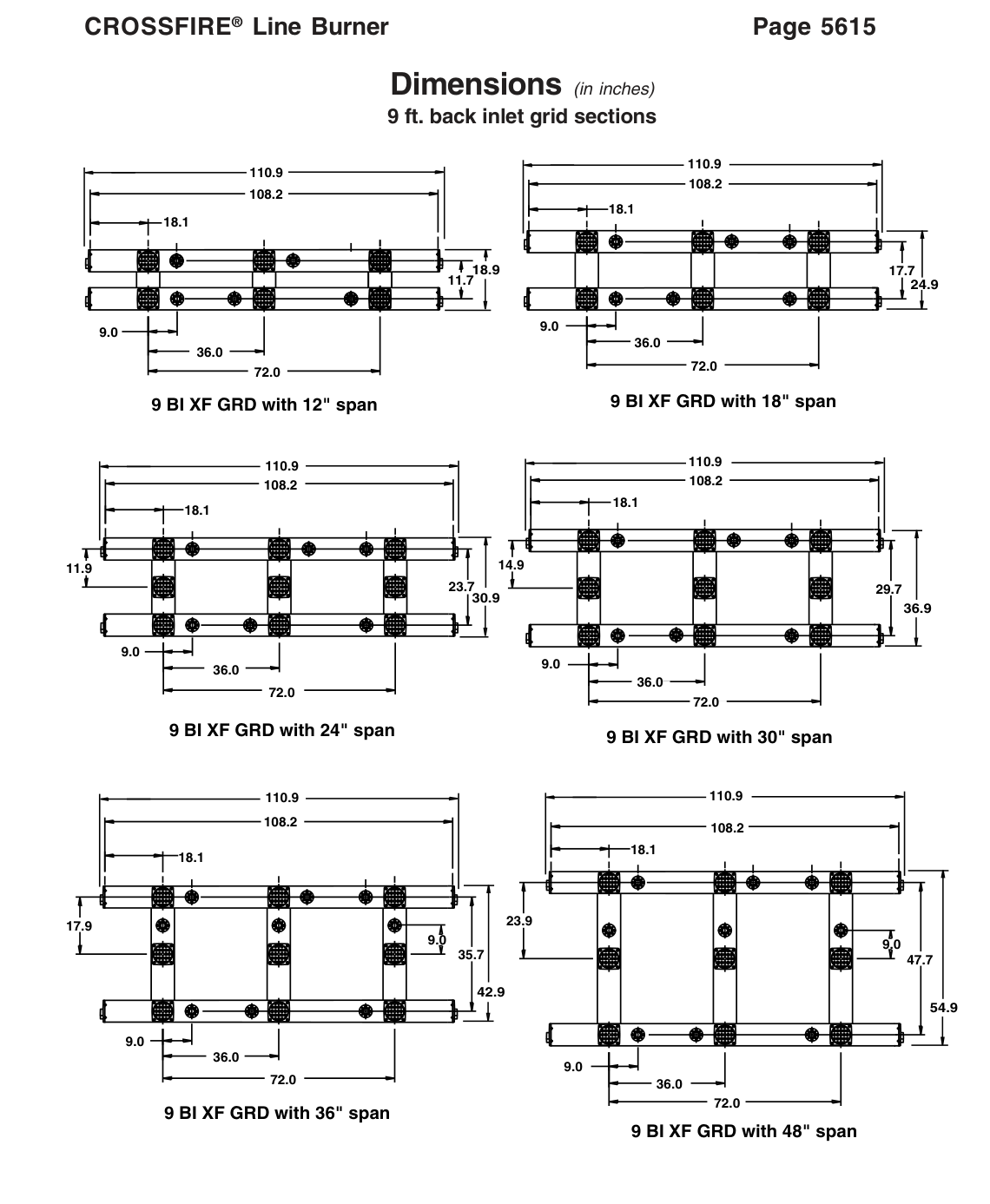
CROSSFIRE manufacturer dimensional example: a 9 ft grid configuration, with dimensions in inches. Grid size and pattern must be selected for the actual duct.
01

Recirculating industrial dryers

The manufacturer identifies recirculated-air process heating and operation in high-moisture streams. For a dryer, these characteristics are considered with the complete return-air and exhaust arrangement. The selected operating envelope must cover changes in production load and fresh-air addition.

02

Veneer-dryer heating and upgrades

CROSSFIRE has a documented equipment-manufacturer application in veneer dryers: Westmill identifies it as the gas burner used in its dryer-heating offering. That supports considering the series for this sector, while each dryer still requires its own airflow, moisture and burner-layout assessment.

03

Distributed duct heating

Where the heater needs a heat source spread across the air passage, straight or grid sections provide configuration options. The layout is developed together with downstream mixing space and temperature-distribution requirements. A quoted emissions limit should state its operating and measurement conditions.

Choosing the Configuration

The oxygen range is only one part of the operating envelope. Temperature, velocity and moisture determine the applicable firing rate and installation arrangement.

Product FAQs

Selection, supply and retrofit guidance for your CROSSFIRE project.

CROSSFIRE selection

Which process-air conditions are needed for CROSSFIRE selection?

Provide oxygen content, temperature, velocity or airflow, pressure and relevant stream composition across the operating range. These conditions interact with the available firing duty and should not be treated as independent checklist values.

Include startup, normal production and minimum-load conditions. If moisture, dilution or recirculation changes during operation, describe that variation so the proposed operating envelope can be reviewed.

Can the illustrated CROSSFIRE grid be scaled to any duct?

The drawing shows a particular grid configuration. The required pattern and dimensions depend on duct geometry, process airflow and the heat input, as well as available installation and service access.

Send a duct cross-section, the proposed location and airflow information. The example should be used to discuss the arrangement, not as a construction drawing for a different duct or firing duty.

Supply & retrofit

What should be included in the quotation?

Identify the grid or burner-section arrangement, fuel supply, mounting and required ignition and flame-supervision provisions. The quotation should state any included gas-train or control equipment.

Duct modifications, process-air equipment and system integration should be addressed separately. The application drawing represents an example assembly, not a complete supply package for every project.

What information helps assess a retrofit?

Share the existing burner nameplate, grid photos and dimensions, plus the duct geometry and operating stream data. Describe changes to oxygen, temperature, airflow or moisture over the production cycle.

Available P&ID and electrical drawings help review fuel and process interlocks. Include the reason for replacement and any planned duty increase, since matching the old grid dimensions alone does not confirm suitability.

How are price and lead time confirmed?

Price and lead time depend on the selected configuration, supply scope, quantity and delivery country. Include any planned shutdown date so current availability and the required delivery date can be discussed before ordering.

What if we do not have all the technical information yet?

Start with the application, whether the installation is new or a retrofit, and any model details or photos you have. Mention available P&ID or electrical drawings in the enquiry and share them by email during follow-up.

Product enquiry

Honeywell MAXON CROSSFIRE industrial burner
MaxonCROSSFIRE
Part code

Send the full range of process flow, temperatures, oxygen and moisture, together with duct geometry and required heat input.

Planning a retrofit?

Along with the nameplate and installation photos, available P&ID (piping and instrumentation diagram) and electrical or control drawings help us understand the existing system.

Drawings are optional. Mention them below and share them by email during follow-up.

Have a P&ID or electrical drawings? Let us know here; files can be shared by email during follow-up.

Your information is used to respond to your inquiry. Privacy policy

Chat with us on WhatsApp