MAXON KINEDIZER LE Gas Burners

Technical Specifications

Heat input 160–21,960 kW HHV at 30% excess air
Fuel Natural gas or propane, by nozzle
Burner type Medium-velocity nozzle mixing
Combustion air External supply; preheated air up to 350°C
Process temperature Up to 1,100°C
Turndown 20:1 reference; low-emissions operating range is narrower

Ratings vary by size and configuration. HHV/LHV values are fuel heat input, not useful process heat output.

Price on request

Product Overview

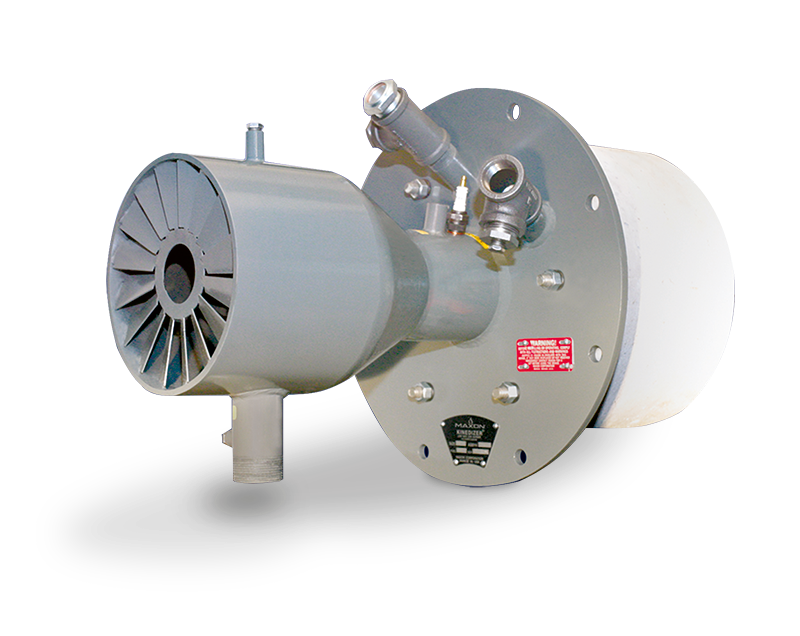
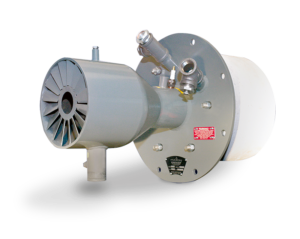
MAXON KINEDIZER LE is a nozzle-mixing burner designed for low-emissions operation in industrial heating equipment. It combines a medium-velocity discharge with a reinforced refractory block, steel body and nozzle. Manufacturer-listed applications include oxidizers, process heaters, kilns, furnaces, dryers and waste-incineration equipment.

Combustion air is provided by an external blower, and fuel and air are modulated through a suitable ratio-control arrangement. The design accepts specified preheated and reduced-oxygen combustion-air conditions. Those capabilities are useful in process integration, but the actual air temperature, oxygen content and duty must be matched to the selected rating.

Mixing, Excess Air and Emissions

KINEDIZER LE uses its mixing arrangement to limit emissions while operating with relatively little excess air. Its medium-velocity discharge also promotes mixing within the chamber. The project should define the NOx/CO requirement together with the operating range and measurement basis. The standard KINEDIZER LE covered here is distinct from the later KINEDIZER Staged LE platform; their performance claims should not be combined.
WHERE IT WORKS

Applications

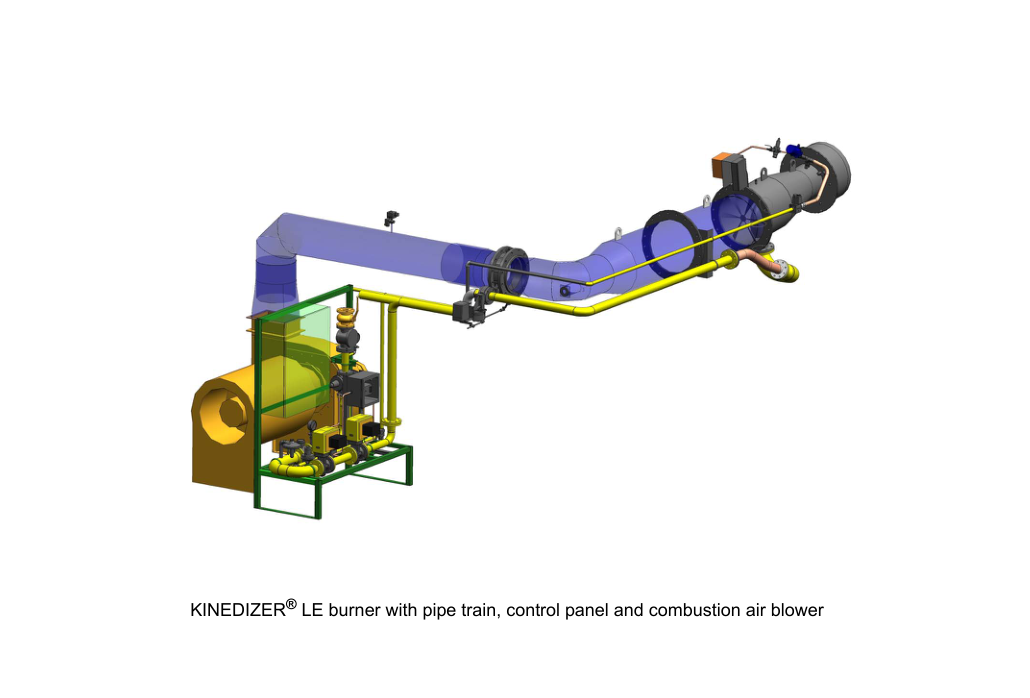
KINEDIZER LE manufacturer system example with burner, fuel train, blower and controls. This illustrates standard LE system components; the ordered package must be defined separately.
01

Thermal oxidizers and waste incineration

These are primary manufacturer-listed applications. The burner may provide startup heat and the additional heat needed during operation. Selection should account for the lowest required firing rate as well as the initial heating duty, with process-stream conditions reviewed separately.

02

Industrial process heaters

KINEDIZER LE is suited to specified chamber-heating duties with an emissions requirement. The burner, air supply and control arrangement are selected around the chamber geometry and heat input, including any change in combustion-air temperature during operation.

03

Kilns, furnaces and dryers

The manufacturer also lists these equipment types. Their heating cycles and air conditions can be very different, so the burner is configured for the particular installation. A low-temperature duty may require the specified discharge-sleeve arrangement in addition to the burner block.

Choosing the Configuration

The stated capacity is at 30% excess air. Other firing conditions have separate ratings. For low-temperature duties below 760°C, the manufacturer specifies an additional discharge sleeve.

Product FAQs

Selection, supply and retrofit guidance for your KINEDIZER LE project.

KINEDIZER LE selection

Does this page cover KINEDIZER LE or KINEDIZER Staged LE?

This page covers KINEDIZER LE. Staged LE is a distinct configuration and should be identified separately when requesting a replacement or comparing a project specification.

Send the complete existing nameplate or the specified product designation. Include fuel, duty range and air conditions so the correct documentation and configuration are used for the proposal.

Can you confirm emissions performance from the burner name alone?

An emissions requirement needs a defined operating and measurement basis, including fuel, firing range, furnace conditions and the oxygen reference used for reporting. A low-emissions family name is not a guarantee for every installation.

Provide the required limits and test basis, together with combustion-air temperature and composition across startup, normal operation and minimum load. Any performance commitment should be assessed for the agreed project conditions.

Supply & retrofit

What should be included in the quotation?

Define the burner configuration, combustion-air supply and any required mounting or discharge components. Identify the fuel train, ignition, flame supervision and control equipment to be included.

The example drawing shows a system arrangement, not a standard bill of supply. Any emissions-related design or commissioning requirement should be stated explicitly in the project scope.

What information helps assess a retrofit?

Send the full burner designation, installation photos, chamber and mounting details, and fuel/air operating data. Include the current emissions results and reporting basis if emissions improvement is a project objective.

Available P&ID and electrical drawings help review the blower, fuel train and safety interfaces. Describe startup and low-load conditions as well as normal production, especially where air temperature or composition varies.

How are price and lead time confirmed?

Price and lead time depend on the selected configuration, supply scope, quantity and delivery country. Include any planned shutdown date so current availability and the required delivery date can be discussed before ordering.

What if we do not have all the technical information yet?

Start with the application, whether the installation is new or a retrofit, and any model details or photos you have. Mention available P&ID or electrical drawings in the enquiry and share them by email during follow-up.

Product enquiry

Honeywell MAXON KINEDIZER LE industrial burner
MaxonKINEDIZER LE
Part code

Send startup/normal/minimum duty, fuel, combustion-air conditions, chamber data and the required NOx/CO measurement basis.

Planning a retrofit?

Along with the nameplate and installation photos, available P&ID (piping and instrumentation diagram) and electrical or control drawings help us understand the existing system.

Drawings are optional. Mention them below and share them by email during follow-up.

Have a P&ID or electrical drawings? Let us know here; files can be shared by email during follow-up.

Your information is used to respond to your inquiry. Privacy policy

Chat with us on WhatsApp