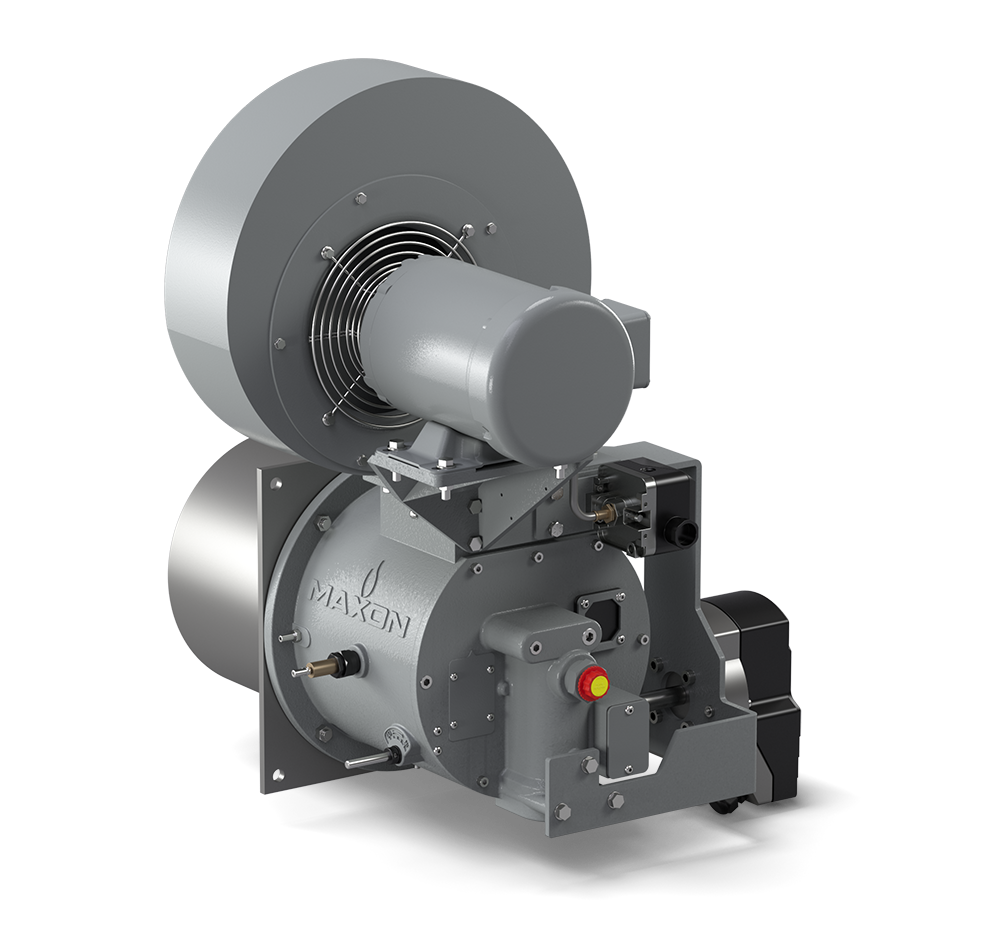
MAXON OVENPAK 400 & 500 Burners

Technical Specifications

400 heat input Approx. 147–4,836 kW, maximum ratings across configurations
500 heat input Approx. 234–2,945 kW, maximum ratings across configurations
Fuel 400: gas; 500: gas or gas / No. 2 oil, by version
Burner type Nozzle mixing
Air supply Integral or external blower
400 downstream temperature Up to 538°C with standard sleeve; up to 816°C with high-temperature sleeve

Ratings vary by size and configuration. HHV/LHV values are fuel heat input, not useful process heat output.

Price on request

Product Overview

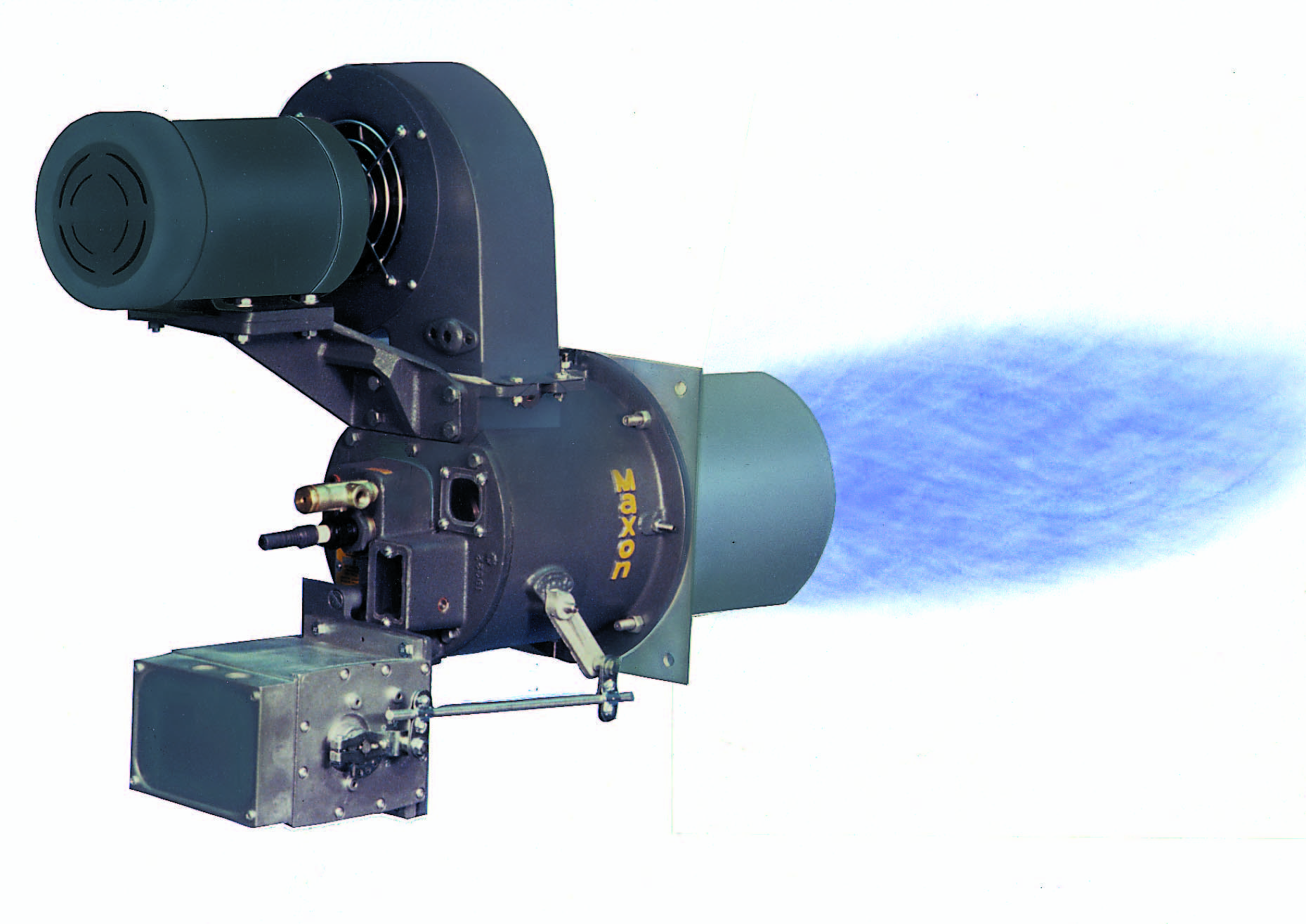
MAXON OVENPAK 400 and 500 burners provide direct-fired heat for a broad range of industrial air-heating equipment. Both families use nozzle mixing and a burner-cone arrangement to bring fuel and combustion air together at the firing point. They are used in ovens and dryers where the heat source must respond to changing production demand.

The distinction between the two families is the fuel arrangement. OVENPAK 400 is the gas-burner family. OVENPAK 500 includes gas and combination gas/light-oil versions, giving projects a route to alternate or standby fuel operation when the complete assembly is specified accordingly.

Gas and Combination-Fuel Arrangements

OVENPAK 500 oil firing uses compressed air for atomization. This makes the available air utility, oil equipment and flame-supervision arrangement part of the selection. The 400 and 500 families also offer different blower and discharge-sleeve configurations. A complete model reference is therefore more useful than the OVENPAK name alone when evaluating an existing burner or preparing a replacement.
WHERE IT WORKS

Applications

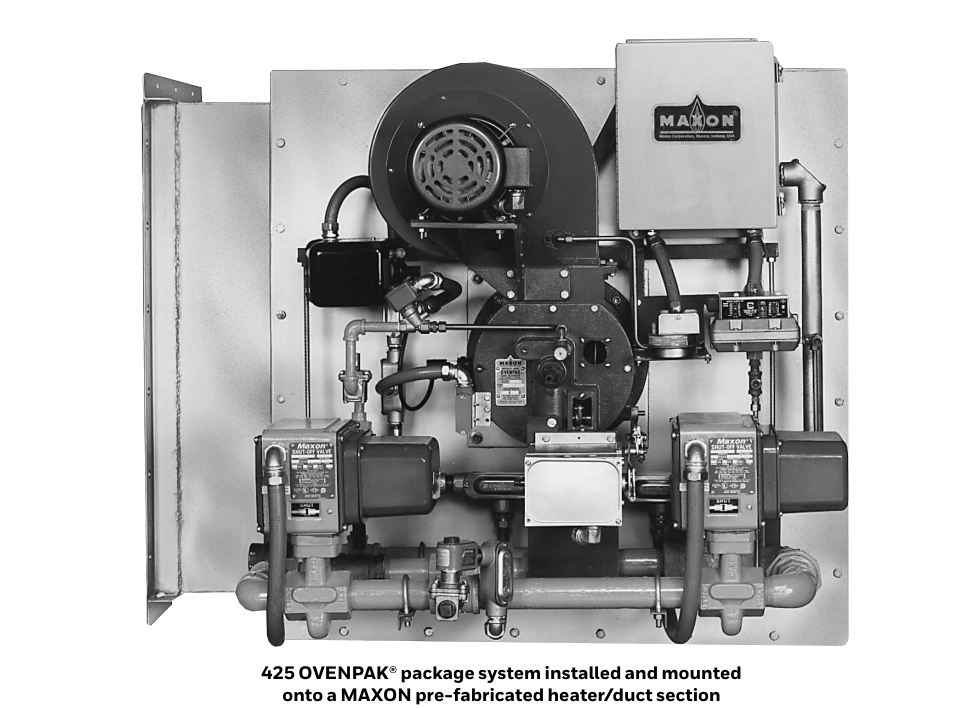
OVENPAK Model 425 package example from the manufacturer: burner, piping and control cabinet. This illustrates one 400-series arrangement, not the standard scope for every 400 or 500 burner.
01

Paint finishing and curing ovens

Both families are used in paint-finishing lines and drying ovens. The heat source is matched to the passing airstream, with capacity selected for warm-up and steady operation. The intended fuel arrangement determines which family provides the appropriate starting point.

02

Paper and textile machinery

OVENPAK application literature includes paper and textile machines. In this equipment, heat input, airflow and installation space must be considered together. A replacement review should include the sleeve, blower and mounting details so the burner can be integrated with the existing machine.

03

Food baking, coffee roasting and grain drying

These are manufacturer-listed OVENPAK applications. The burner configuration is selected around the process heating method and fuel supply. Where alternate liquid fuel is required, the quotation should identify that operating mode explicitly and include the associated atomization and fuel equipment.

Choosing the Configuration

400 and 500 are separate families. Select the full version and 50/60 Hz supply; the figures above describe maximum-rated options across each family, not the turndown of one burner.

Product FAQs

Selection, supply and retrofit guidance for your OVENPAK 400 / 500 project.

OVENPAK 400 / 500 selection

How do I choose between OVENPAK 400 and OVENPAK 500?

Treat them as separate burner families, not as consecutive steps in one capacity range. The required fuel, complete model designation, heat input and combustion-air arrangement determine which configurations should be considered.

Send the existing nameplate or your proposed process duty and fuel specification. Gas and oil configurations, as well as packaged and external-blower variants, need their own technical and supply checks.

Which details matter beyond the OVENPAK model number?

The complete designation and assembly details matter, including any SP or EB identification, blower arrangement, electrical supply and mounting interface. A short family name can refer to materially different packages.

For a new oven or dryer, share the duty range, airflow, chamber pressure and operating temperatures. For a replacement, include photographs of the actual assembly and connections so the quoted configuration can be compared with the installed equipment.

Supply & retrofit

What should be included in the quotation?

A burner assembly and a preassembled combustion package are different scopes. Identify whether the request includes a blower, fuel train, ignition, flame supervision, controls or only the burner and specified accessories.

The package photo on this page is a Model 425 example. Its piping and cabinet should not be assumed to be included with every OVENPAK 400 or 500 quotation.

What information helps assess a retrofit?

Provide the full nameplate, fuel currently used, burner and blower photos, mounting dimensions and the existing control arrangement. Tell us whether the project changes the fuel, firing rate or chamber operating conditions.

A P&ID and electrical drawings, when available, help identify the existing fuel train and safety interfaces. They support a configuration review; a replacement should not be chosen solely because a different family has a similar nominal output.

How are price and lead time confirmed?

Price and lead time depend on the selected configuration, supply scope, quantity and delivery country. Include any planned shutdown date so current availability and the required delivery date can be discussed before ordering.

What if we do not have all the technical information yet?

Start with the application, whether the installation is new or a retrofit, and any model details or photos you have. Mention available P&ID or electrical drawings in the enquiry and share them by email during follow-up.

Product enquiry

Honeywell MAXON OVENPAK 400 / 500 industrial burner
MaxonOVENPAK 400 / 500
Part code

Send the complete model, required duty, gas/oil specification, available utilities and mounting details. State which items you need included in the quotation.

Planning a retrofit?

Along with the nameplate and installation photos, available P&ID (piping and instrumentation diagram) and electrical or control drawings help us understand the existing system.

Drawings are optional. Mention them below and share them by email during follow-up.

Have a P&ID or electrical drawings? Let us know here; files can be shared by email during follow-up.

Your information is used to respond to your inquiry. Privacy policy

Chat with us on WhatsApp