MAXON OVENPAK LE Gas Burners

Technical Specifications

Heat input 146–2,050 kW HHV, packaged at 60 Hz; EB versions up to 2,928 kW
Fuel Natural gas; LPG options
Burner type Nozzle-mixing gas burner
Air supply Integral or external blower
Process temperature Up to 525°C; indirect arrangements up to 815°C

Ratings vary by size and configuration. HHV/LHV values are fuel heat input, not useful process heat output.

Price on request

Product Overview

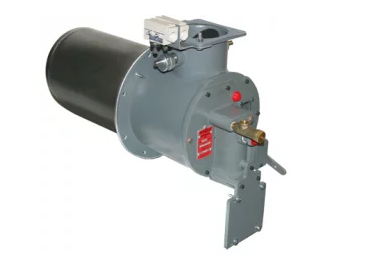
MAXON OVENPAK LE is a nozzle-mixing gas burner for industrial ovens, dryers and other process-air heaters. Gas passes through the nozzle and along the inside of the burner cone, where it mixes rapidly with combustion air. This arrangement supports a stable flame while heat demand changes during the production cycle.

The LE family combines a compact burner assembly with a combustion design intended to limit NOx and CO. Packaged versions include the combustion-air blower; EB versions use an external air supply. This gives the equipment designer different ways to fit the heat source into an oven wall, air-heating chamber or existing installation.

Balanced-Pressure Combustion

The burner balances fuel and air pressures through its mixing arrangement. That design helps it accommodate changes in firing-chamber pressure and simplifies adjustment across the operating range. For an oven project, it is useful to consider this alongside the circulation and exhaust fans, since their operating conditions influence the pressure at the burner. The final emissions level remains specific to the selected assembly and process conditions.
WHERE IT WORKS

Applications

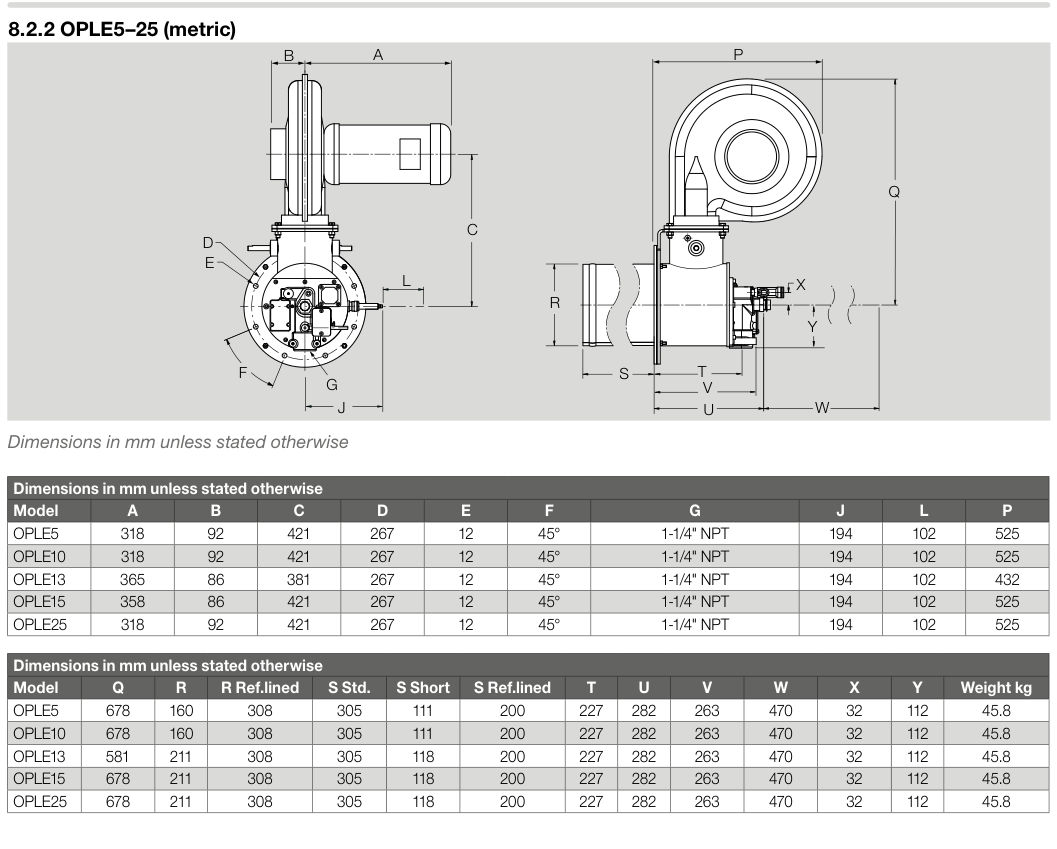
OPLE sizes 5–25: manufacturer dimensional reference. Dimensions depend on the selected size; this drawing does not cover every OVENPAK LE configuration.
01

Dry-off and paint-curing ovens

OVENPAK LE introduces heat into the airstream used for drying and curing. These ovens may require a high input during warm-up and a lower input during production. The selected burner needs to cover both duties while fitting the air-circulation arrangement and available flame space.

02

Paper and textile drying

Paper and textile machines use heated air to remove moisture from the moving product. OVENPAK LE is listed for both applications. Selection begins with the duty of each heating zone, together with airflow and temperature rise, so the burner works with the dryer rather than being sized from temperature alone.

03

Baking, roasting and grain drying

Manufacturer application examples include food-baking ovens, coffee roasters and grain dryers. For these uses, the equipment design determines how combustion products contact the process. Product requirements, heating method and the operating air conditions should therefore be established before selecting a burner configuration.

Choosing the Configuration

Packaged and EB versions use different air-supply arrangements. Motor frequency affects packaged capacity, and emissions must be assessed at the specified operating conditions.

Product FAQs

Selection, supply and retrofit guidance for your OVENPAK LE project.

OVENPAK LE selection

Should I choose a packaged OVENPAK LE or an EB version?

Start with the required heat input and the combustion-air arrangement. A packaged burner includes its own blower arrangement; an EB configuration uses an external combustion-air supply. Their ratings and installation requirements should be checked separately.

Share the fuel, available gas pressure, chamber pressure and electrical frequency. For an EB proposal, include the available combustion-air pressure and temperature so the burner and air supply can be reviewed together.

Can I select the burner from its maximum kW rating alone?

The maximum rating is only a starting point. Burner size, blower configuration and motor frequency affect the available operating range, while the oven airflow and pressure influence the installation.

For a dryer or process-air heater, provide the required maximum and minimum duty, airflow, inlet and target outlet temperatures, and any emissions requirement. The proposed configuration should be checked against those conditions before ordering.

Supply & retrofit

What should be included in the quotation?

Please specify whether you need the burner assembly, replacement components or a wider combustion package. The quotation should identify the selected size, blower arrangement and mounting configuration.

Gas valves, ignition, flame supervision, control equipment and installation work should be listed separately where required. An OVENPAK LE family name alone does not define a complete supply package.

What information helps assess a retrofit?

Share the existing nameplate, burner and chamber photos, mounting dimensions, gas supply details and motor voltage/frequency. For an external-air installation, include the blower data and combustion-air connection.

Available P&ID and electrical or control drawings help us review the existing train and interlocks. Note any changes to oven airflow, chamber pressure or production duty; matching the old nominal capacity is not enough to confirm a replacement.

How are price and lead time confirmed?

Price and lead time depend on the selected configuration, supply scope, quantity and delivery country. Include any planned shutdown date so current availability and the required delivery date can be discussed before ordering.

What if we do not have all the technical information yet?

Start with the application, whether the installation is new or a retrofit, and any model details or photos you have. Mention available P&ID or electrical drawings in the enquiry and share them by email during follow-up.

Product enquiry

Honeywell MAXON OVENPAK LE industrial burner
MaxonOVENPAK LE
Part code

Send the oven duty, airflow, inlet/outlet temperatures, fuel pressure and motor frequency. For a retrofit, add the nameplate and burner-opening drawing.

Planning a retrofit?

Along with the nameplate and installation photos, available P&ID (piping and instrumentation diagram) and electrical or control drawings help us understand the existing system.

Drawings are optional. Mention them below and share them by email during follow-up.

Have a P&ID or electrical drawings? Let us know here; files can be shared by email during follow-up.

Your information is used to respond to your inquiry. Privacy policy

Chat with us on WhatsApp